


Continuously adaptive humanoid locomotion through perception loss and recovery.
MAGIC Lab
Explore our workResearch
01
02
03
Embodied intelligence
Learning through physical interaction. Humanoid locomotion, dexterous manipulation and coordinated whole-body control.
- Humanoid robots
- Manipulation
- Robot learning
Spatial intelligence
Understanding the structure of the world through 3D perception, object pose estimation, SLAM and neural scene representations.
- 3D vision
- SLAM
- Neural mapping
Decision intelligence
Anticipating other agents, reasoning about uncertainty and planning safe actions in dynamic environments.
- World models
- Planning & control
- Multi-agent interaction
Recent Publications
All publicationsNeurIPS 2026CoRL 2026
ECCV 2026
RSS 2026
CVPR 2026
DexOPE
6D Object Pose Estimation in Dexterous Manipulation
CAP
Continuously Adaptive Perception-Blind Humanoid Locomotion via Learned Denoising
AutoSpeed
Annotation-Free Stage-Adaptive Motion Speed Learning for Robot Manipulation
Rhythm
Learning Interactive Whole-Body Control for Dual Humanoids
SparseSplat
Towards Applicable Feed-Forward 3D Gaussian Splatting with Pixel-Unaligned Prediction
Representative Works
Learning interactive whole-body control for two humanoids in the physical world.
Stage-adaptive motion speed learning for precise and efficient robot manipulation.
Adaptive working memory resolves state ambiguity in robot manipulation.
Multi-view diffusion pretraining for 3D-aware, viewpoint-robust robot manipulation.
Visual-inertial Gaussian splatting monocular SLAM for large-scale scenes.
Feed-forward accelerated Gaussian splatting monocular SLAM.
Applicable feed-forward 3D Gaussian splatting with pixel-unaligned prediction.
A benchmark for dynamic object pose estimation and tracking with moving cameras.
Online open-vocabulary mapping with neural implicit representation.
Diverse future scene synthesis through agent behavior modeling and 3D Gaussian splatting.
3D semantic occupancy prediction using long-term memory priors from historical traversals.
Online dense mapping with hybrid Gaussian representation in urban scenes.
Online neural implicit dense mapping in urban scenes.
A unified occupancy-language-action world model for autonomous driving tasks.
Safety-enhanced end-to-end autonomous driving via corridor learning and planning.
Hierarchical planning for active scene reconstruction using 3D Gaussian splatting.
Occlusion-aware decision-making from agent interaction via active perception.
Navigation understanding for end-to-end autonomous driving.
Trajectory optimization for controllable interactions in multi-vehicle scenarios.
News
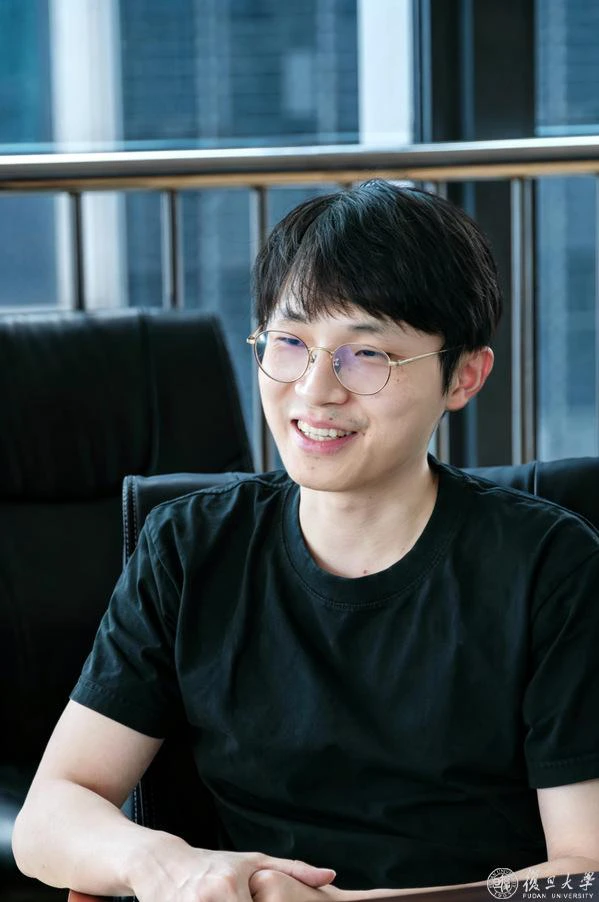
Fudan profiles Wenchao Ding, a TR35 China honoree
Named to MIT Technology Review's 2025 TR35 China list in the Inventors category, Wenchao Ding shares his research and teaching journey from autonomous driving to embodied intelligence.
Fudan University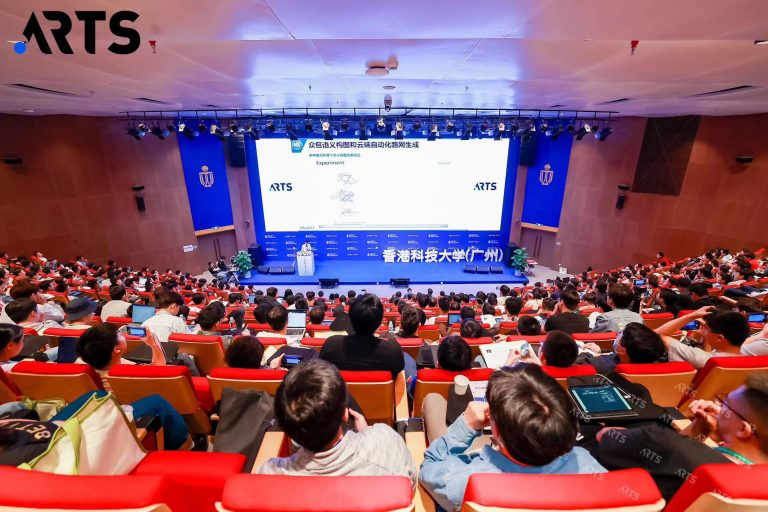
Research exchange at ARTS
Sharing systems research with the wider autonomous technology community.
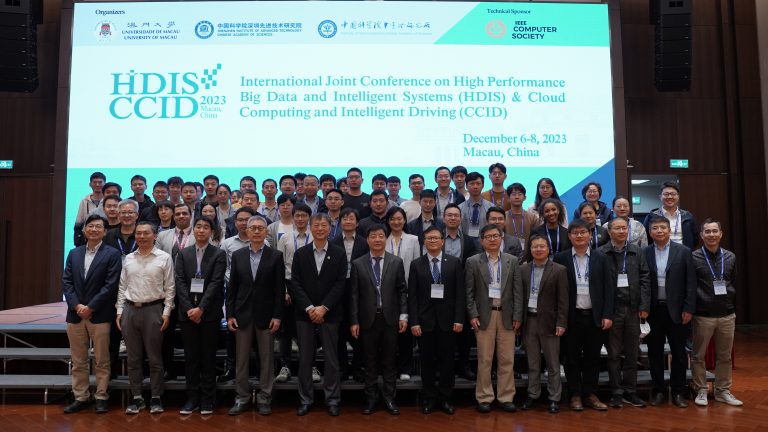
Ideas in conversation
Connecting mapping, robotics and intelligent driving across disciplines.
Connect
We welcome conversations around research collaboration, open-source systems and graduate study at Fudan University.